A Lowcountry Homeowner’s Guide
Live oaks, pines, palms, and other mature trees are part of what makes the Lowcountry feel like home. They also put roofs through a lot.
A branch doesn’t have to crash through the roof to cause damage. Limbs that scrape shingles during wind, drop debris into valleys, block gutters, or hang over the roofline can quietly shorten the life of a roofing system. Then a summer storm turns a manageable maintenance issue into an emergency call.
The good news is that most tree-related roof damage is preventable. The key is knowing what to watch for, what to leave to a tree professional, and when a professional roofing inspection makes sense.
How Tree Limbs Damage Roofs
Tree damage is not always dramatic. In many cases, it starts with repeated contact or debris buildup.
Branches rubbing against shingles
A limb that brushes the roof during wind can scrape away the protective granules on asphalt shingles. Over time, that wear exposes the shingle surface to more sun and weather, making it age faster.
The rubbing can also lift shingle edges, damage ridge caps, or wear through material around roof transitions. Even a small branch can do damage if it moves against the roof often enough.
Debris in valleys and gutters
Leaves, pine needles, acorns, moss, twigs, and seed pods collect where water is supposed to move off the roof. Once valleys or gutters clog, water can back up beneath shingles or overflow onto fascia, soffit, and siding.
That matters in the Charleston area, where heavy rain can arrive quickly. A roof may shed water just fine during a normal shower but struggle when a summer storm drops a large amount of rain in a short time.
Falling limbs and punctures
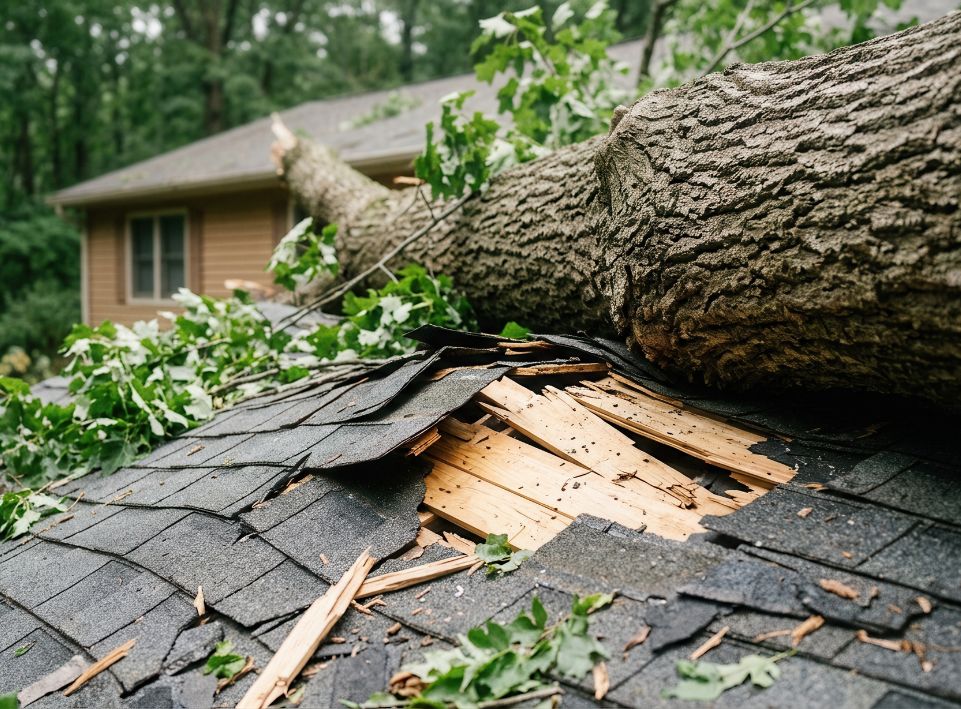
This is the damage homeowners notice immediately. A large branch can crack shingles, puncture decking, damage flashing, break gutters, or create an opening that lets water into the attic.
Even roofing materials built for harsh weather can be damaged by a heavy fallen limb or flying debris.
Shade and trapped moisture
Trees that heavily shade a roof can slow drying after rain. That does not automatically mean the roof is failing, but repeated moisture, trapped debris, and reduced airflow can contribute to algae growth and premature wear.
Signs Your Trees Are Too Close to the Roof
You do not need to climb a ladder to spot most issues. Walk around your home and look for these warning signs:
- Limbs touching the roof, gutters, chimney, or siding
- Branches hanging directly over the roofline
- Roof debris collecting in valleys or behind chimneys
- Gutters filled with leaves, pine needles, or small branches
- Shingle wear where limbs appear to make contact
- Broken, dead, split, or hanging branches
- Leaning trees, exposed roots, or visible decay near the home
- A roof that stays damp or heavily shaded long after rain
A practical goal is to keep limbs from touching or directly overhanging the roof. Some roofing guidance suggests maintaining approximately 6 feet of clearance between branch tips and the roof, though the right pruning plan depends on the tree species, its health, and the property.
What Homeowners Can Do Safely
There is plenty a homeowner can do from the ground.
Keep an eye on the roofline
Check the roof and nearby trees a few times each year, particularly before storm season and after severe weather. Binoculars can help you spot loose limbs, roof debris, or branches that have moved closer to the house.
Keep gutters moving
Clear gutters and downspouts so water has somewhere to go. If your home sits beneath pines or large hardwoods, you may need to check them more often than a home on an open lot.
Document changes
Take photos when you notice new damage, a branch resting on the roof, or debris after a storm. Dated photos are useful if you later need a roofer to assess the condition or speak with your insurance carrier.
Schedule professional help early
Call a qualified tree-care professional for high branches, dead limbs, or anything close to power lines. Call a roofer if you see damaged shingles, gutter separation, staining inside the home, or signs that a limb made contact with the roof.
Do not climb onto the roof, cut branches from a ladder, or try to remove a limb that is under tension. Those jobs can turn dangerous quickly.
Tree Care and Roof Care Work Together
Tree pruning and roof maintenance are related, but they are different jobs.
An arborist or qualified tree professional can evaluate the tree’s health, structure, and pruning needs. A Charleston roofing contractor can inspect the roof for damaged shingles, punctures, flashing problems, loosened gutters, or leaks that may have followed branch contact.
If a limb falls on the house, the order matters:
- Make sure everyone is safe. If there is a major structural concern, downed power line, or immediate danger, leave the area and call emergency services.
- Do not climb on the roof or attempt to remove the branch yourself.
- Take photos from a safe location before anything is moved.
- Protect the interior from active water if it is safe to do so.
- Call a qualified tree-removal company and a roofing professional.
- Contact your insurance carrier promptly and keep receipts for emergency work and temporary protection.
Insurance coverage depends on the policy, the cause of the loss, the condition of the tree, and the insurer’s assessment. A roofing contractor can document visible damage and help provide a repair scope, but no contractor can promise what an insurer will cover.
Homeowners are generally advised to photograph damage, take reasonable steps to prevent additional damage, and contact their carrier quickly.
When to Call a Roofer
A roofing inspection is worth scheduling if you notice any of the following:
- A limb has struck the roof, even if there is no obvious hole
- You find shingles, flashing, or gutter pieces on the ground
- Branches have been rubbing the roof for an extended period
- A storm leaves fresh debris on the roof or in gutters
- You see interior stains, dripping, peeling ceiling paint, or attic moisture
- The roof looks uneven, sagged, or visibly damaged from the ground
- A tree removal crew had to work close to the roof
Small damage is usually less expensive and easier to repair before the next rain. Waiting can allow water to move beyond the roof covering and into insulation, decking, drywall, and electrical systems.
Lowcountry Storm-Season Checklist
Before the next major weather system moves through, take a few practical steps:
- Have dead, damaged, or overhanging limbs evaluated and trimmed.
- Clear roof debris, gutters, and downspouts.
- Check that downspouts direct water away from the foundation.
- Look for branches rubbing against the roof or siding.
- Photograph your roof and exterior before a storm if you can safely do so.
- Keep a roofing contractor’s contact information available for emergency situations.
- Schedule an inspection if your roof is older, has previous storm repairs, or sits beneath heavy tree cover.
Pioneer Roofing provides roof inspections and roof repair for homeowners across the Charleston area. Reach out today to get started.
Frequently Asked Questions
Branches should not touch or hang directly over the roof. A commonly cited guideline is to maintain about 6 feet of clearance, but a tree professional should determine the safest pruning approach for the specific tree and property.
Yes. Repeated rubbing can wear away protective granules, lift shingle edges, damage ridge caps, and create places where water can eventually enter.
It depends on your policy, deductible, the cause of the fall, and the condition of the tree. Contact your insurance carrier for a coverage determination. Document the damage and retain receipts for emergency measures.
No. A branch may be under tension, and climbing onto a damaged or debris-covered roof is dangerous. Call qualified tree and roofing professionals.
Prioritize safety, stay away from downed power lines, document the damage from a safe location, take reasonable steps to limit further interior water damage, and call for emergency roof service if the roof has been opened or is leaking.